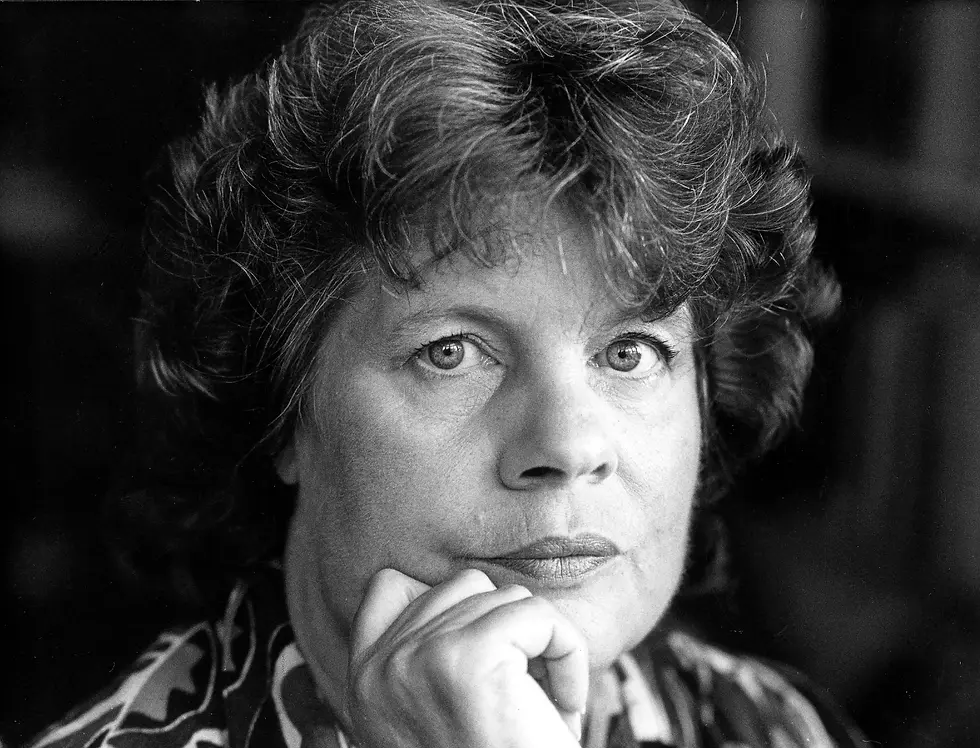


On a cold, incisive writer


Sunday morning. Pale weather: my eyes hurt in the light from the window, and I'd need three or four cups of coffee to feel properly awake. I'm still reading A Book of Common Prayer and struggling a bit with it. It becomes more pleasant from the middle onward (which is one reason, among others, why I refuse to abandon books I don't like once I've started them; I chose them, bought them—paid for them; I always want to follow through on my initial impulse, which was to focus my attention on these particular books; and I firmly believe that one cannot properly judge a book until one has read its very last page. This will probably be considered an unpopular opinion. In any case, it probably says something more about the fixity that characterizes me. N. would approve.)
I think what I truly love about Didion is the way she explores territories I will probably never fully know "in real life" and can only ever approach from afar: America, in general, of course, and, in A Book of Common Prayer, Latin America, with its descriptions of a very specific environment and its cultural and political references I know nothing about; and precisely for that reason it broadens my knowledge, giving me a taste of something different. And then there is, in Didion's novels, this particular stretch of time from the fifties to the seventies (I have not yet read Democracy, 1984, or The Last Thing He Wanted, 1996) that I find enthralling; a kind of novel more modern than what I usually read (that is, mainly 19th century literature), though not contemporary enough to confront me with the most unsettling aspects of modern life (obsession with technological novelty, social media,...). What else do I like so much about her? Didion's books invariably contain these tormented characters, riddled with flaws—antiheroes, really—not at all likeable and impossible to identify with, and whom I nevertheless always end up finding fascinating. I didn't much care for Maria avec et sans rien (or Mauvais Joueurs, the alternative French title, or even, in the original, Play It As It Lays), but I still remember certain elements of that very dark plot, with its utterly unbalanced woman whose purely imagined existence has remained with me as if she had truly lived... The same is true of Une saison de nuits (Run River), which I think marked me even more.
My only real difficulty with Didion's writing lies here, and it is rather odd to say: the sheer number of different characters, and the sheer amount of highly realistic dialogue (perhaps even too realistic: too precise, too factual; as though everything Joan Didion wrote were not invented but reported, real. That can be a good thing, I agree: the mark of a gifted author who knows how to shape her stories; something I certainly do not deny her, since I find her truly talented at building a narrative from beginning to end, so fully immersed in it that she gives the reader the impression that she is merely reporting, clinically and coldly, events that actually took place. But in my case, given my personal tastes as a reader, all these somewhat technical details, all these scattered fragments of conversation that do indeed lend the novel a strong sense of realism, quickly become overwhelming.) I also feel that, according to my own tastes and preferences, there are not enough moments of deep introspection in Didion's novels, as it seems that the reader is always plunged into action and into situations that would be highly improbable in real life but are perfectly coherent within the fabric of the novels, and I invariably end up losing the thread I had managed, or perhaps struggled, to grasp, often halfway through the book; that is to say, in Didion's case, about a quarter of the way in. There are not enough moments of respite, though such moments are beneficial, I believe, and often lead to profound transformations, to salutary and liberating realizations.
But did Didion herself allow enough time for reflection in her own life? It is a fair question. One need only read Notes to John to see that, far from the somewhat fantastical writing of her novels, she tried to untangle her personal and family difficulties in a rather hazy state of mind. Didion is not primarily a writer of feeling; she is cold, analytical, incisive, sharp, operating almost entirely with her head and with very little involvement from the heart. Of course, there are The Year of Magical Thinking and Blue Nights; but even with these books, the emotion is contained, and Joan tries to rein in the parts of herself that might crumble...
Ultimately, that, too, is also part of her strength; and even if I could, I would not wish to change her (changing her would mean turning her into an entirely different kind of writer; and I read Didion specifically for what I sometimes criticize about her writing). One would no more ask a lyrical, academic poet to write free verse than ask Joan Didion to become someone else. Since every strength has its reverse side, Didion's weaknesses are naturally also part of her power. And after all, if I "lose the thread" while reading her, is that really such a serious matter? She says it herself, through the voice of one of her characters in A Book of Common Prayer: "Perhaps there is no driving force in this story. Events simply happened.".
I. d P
Sunday, March 29, 2026