





On A. S. Byatt's Possession

Dernière mise à jour : 25 avr.
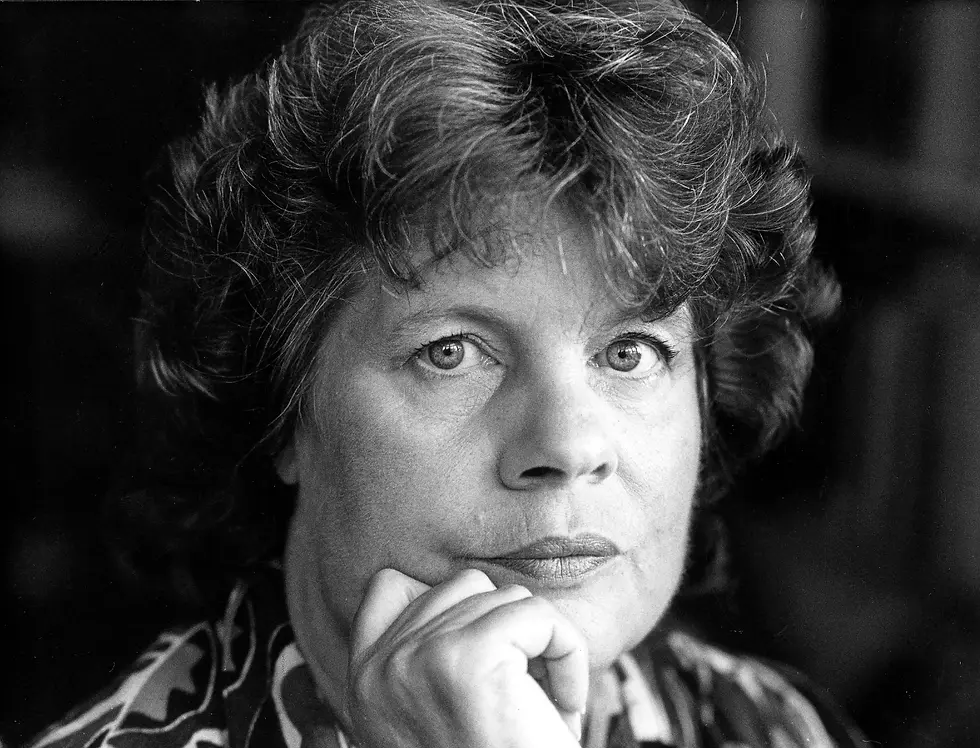
Texte proposé en anglais et en français.
La version française est disponible ci-dessous.
The other day, in a bookshop, I bought A. S. Byatt’s Possession, first published in 1990, along with a slim volume by August Strindberg entitled Alone — but it is Possession I want to say a few words about. As soon as I began reading, the moment I got home, I found myself thinking of the day my father bought The Children’s Book by the same author in the Paris bookshop Galignani, under the arcades, where we had gone for a stroll. “A very interesting woman,” he said, without elaborating, in his characteristically serious and quietly inquisitive way. Had my father taken an interest in a contemporary writer? Yet he seemed perfectly sure of himself; she had apparently worked on subjects that greatly interested him. So he left with the thick blue paperback tucked under his arm, a volume that then found its way onto his shelves — and was never mentioned again. I would occasionally catch sight of it as I passed the bookcases at home, without paying it much attention. That modern edition, in its deep blue, stood in sharp contrast to the sober restraint of the old morocco and cloth bindings, in beige, brown and black (the only impression it made on me, which rather amused me.) But I never thought of that author again... The Children’s Book, in my mind, was destined to remain one of those mysterious books by writers I assumed would forever remain unknown to me. I had no idea that one day I would read it voraciously, in the hope of letting lost voices speak again...
For my father is gone. And the library he left behind sometimes seems to send messages — “signs”? “synchronicities”? I scarcely know what to call them. So, in the bookshop the other day, when I spotted that name again on the shelves, under the letter “B”, “A. S. Byatt”, an entire world came flooding back. I did not know whether my father, who had read Angels and Insects, had also read Possession; but it seemed unthinkable not to buy it, and not to read it immediately. It was, I suppose, an attempt to establish a dialogue between worlds, the material and the immaterial... I wanted to understand why this author had so captivated him. (Byatt, too, is dead. Both of them died in November, but a year apart: 2023 for Antonia Susan, 2024 for my father.)
Possession unfolds across two temporal planes: two love stories, one set in the present day (the novel opens in September 1986), centred on Roland and Maud; the other in the Victorian era, around the middle of the nineteenth century. Alongside Tennyson, Robert Browning and Christina Rossetti stands a fictional poet: Randolph Henry Ash. His love affair with the equally fictional poetess Christabel LaMotte forms the heart of Possession: a novel of suspense, richly atmospheric and erudite, whose opening scene is set in the reading room of the London Library.
In Possession, places matter as much as characters. At the heart of the investigation conducted by the young scholar Roland and the brilliant academic Maud Bailey lies a whole web of locations: from the British Museum to the flat Roland shares with his companion Val in Putney; from the harbour town of Whitby to Brittany, between the forest of Brocéliande and the Finistère. Possession is a bewitching journey, a wonderfully heterogeneous work unlike any other, a novel haunted by great mythological figures that spill far beyond the Victorian framework: the omnipresent Mélusine, half woman, half serpent, on whom Christabel had worked so intently; the gods of the North whom Randolph Henry Ash summoned in his epic poems; the thunderclaps of Ragnarök. Byatt is a virtuoso. She weaves all these elements together with disconcerting coherence. Everything feels true. And as one unravels the thread of the two poets’ liaison, advancing step by step through the relationship forming between the two researchers, the plunge into a world of myth and legend, of fairies and enchantments, of creatures lurking at the edges of Celtic forests and on shores battered by the Atlantic, gradually becomes one’s own quest.
Past and present intermingle so seamlessly that I lost all sense of Time, both in reading Possession, and in setting down these impressions.
“And I had the sensation, common enough, at least to me, that I was moving out of time, that the way, narrow and dark-dappled, stretched away indifferently before and behind, and that I was who I had been and what I would become — all at once, all wound in one — and I moved onward indifferently, since it was all one, whether I came or went, or remained still. Now to me such moments are poetry.”
The aridity of scholarship, and the academic world, portrayed by Byatt with a certain sardonic wit, and at times with a faintly caricatural edge, seems to wrestle with the enthusiasm aroused by literature itself: by the sheer pleasure of reading, of dreaming, of pursuing knowledge for no reason other than delight. And yet one senses that Byatt is as bound as her characters to the academic world, while at the same time keeping it carefully at a distance. The novel is steeped in erudition. The language is sumptuous: descriptive, richly ornamented, and with long, intricate sentences (for how else is one to capture the multiple realities or meanings of a single idea?). Nothing is artificial. Possession is a work of art, unmistakably akin to those nineteenth-century novels from which this modern work directly draws its breath and life. “This might become one of my favourite books,” I found myself thinking as I read. All the more so because I began to draw unexpected parallels with my own life (the relationship between Christabel and her father, for instance, which could not help but bring to mind, for me, the somewhat anachronistic bond between Virginia Woolf and her father Leslie, who opened the doors of his library to her as a child... Reading Moments of Being had left a deep impression on me.)
“I wish you might have known my father. His conversation would have delighted you. There was nothing he did not know — in his chosen field — and nothing he knew that was to him Dead Knowledge — but all alive and brilliant and full of import for our lives —”
As for Roland, his passion for his favourite poet, his desire to read and know everything about him, down to the smallest details of his life and tastes, echoes something I myself experienced when I devoted quite some time to the figure of a particular poet, Léon Deubel.
Generally speaking, I am fascinated by the mixture of genres that Possession embodies, with its extraordinary profusion of letters, newspaper articles and poems, all of them fictional — a remarkable testament to the imaginative and intellectual riches an author may carry within. A work of such intelligence and inwardness could still be recognised and rewarded some thirty years ago... The Booker Prize was awarded to A. S. Byatt in October 1990.
[And writing this piece, I find myself thinking of Marguerite Yourcenar: the same simplicity, the same discretion, the same intellectual power, the same writing steeped in reference and symbols, and imbued with genuine erudition, the same faintly amused gaze upon the world. How sorely the age lacks writers of their kind...]
For a modest price, I acquired a first edition, first printing of the original English edition of Possession, with an inscription dated 27 May 1990, bearing the words “Hay-on-Wye”. After some research, I concluded that Byatt must have signed a number of copies before winning the Booker Prize, at the Hay Festival, which was then no more than a modest local event, barely two years old, while Byatt herself was still relatively little known outside academic circles... I have always loved such small details. So did my father.
“Do you know — the only life I am sure of is the life of the Imagination. Whatever the absolute Truth — or Untruth — (...) Do you touch at my meaning? When I write I know. Remember that miraculous saying of the boy Keats — I am certain of nothing, but the holiness of the Heart’s affections and the truth of Imagination — Now I am not saying — Beauty is Truth, Truth Beauty, or any such quibble. I am saying that without the Maker’s imagination nothing can live for us — whether alive or dead, or once alive and now dead, or waiting to be brought to life —”
Irène d. P.
--
A propos de Possession, d'A. S. Byatt
Acheté l'autre jour, en librairie, Possession d'A. S. Byatt, paru en 1990 (et un petit volume d'August Strindberg intitulé Seul, mais c'est de Possession que je voudrais brièvement parler.) J'avais à l'esprit, en commençant ma lecture, à peine rentrée chez moi, l'image de cette journée où mon père avait acheté The Children's Book du même auteur, dans la librairie parisienne Galignani, sous les arcades, où nous étions allés faire un tour. « Une femme très intéressante », avait-il dit sans trop s'étendre davantage, de son air sérieux et curieux de tout. Un auteur contemporain ? Mon père ? Mais il était tout à fait sûr de lui ; elle avait apparemment travaillé sur des thématiques qui l'intéressaient beaucoup. Il était donc reparti avec l'épais volume bleu, broché, sous le bras, volume qui avait ensuite été glissé dans sa bibliothèque. Et nous n'en avions jamais reparlé. Bien sûr, je le voyais de temps en temps quand je passais devant les étagères de livres, à la maison, mais n'y prêtais guère attention. Cette édition moderne (le livre fut initialement publié en 2009), d'un bleu soutenu, placée à côté des autres ouvrages de mon père, contrastait beaucoup avec la sobriété des reliures anciennes en maroquin ou en toile, et de couleurs beige, marron ou noires... Cela m'amusait. Mais c'est la seule chose à laquelle je pensais. Je n'ai jamais songé de nouveau à cet auteur... The Children's Book, dans mon esprit, ferait toujours partie de ces livres mystérieux d’écrivains qui me resteraient inconnus. Je ne me doutais pas que je le lirais un jour avec une telle avidité, et avec l'objectif de tenter de faire parler certaines voix disparues.
Car mon père n’est plus. Et sa bibliothèque, qu'il a laissée derrière lui, laisse parfois certains messages… « signes » ? « synchronicités » ? Saurais-je le dire ? Ainsi, dans la librairie l'autre jour, revoyant ce nom sur les rayonnages, à la lettre « B », « A. S. Byatt », tout un univers s'est recomposé dans mon esprit. Je ne savais pas si mon père, qui avait lu Angels and Insects, avait lu également Possession ; mais il me semblait impensable de ne pas l'acheter, et de ne pas le dévorer instantanément. Tentative, au fond, d'établir un dialogue entre les mondes, matériel et immatériel. Je voulais savoir pourquoi cet auteur avait tant intéressé mon père. (Byatt aussi, est décédée. Tous deux en novembre, mais à un an d'intervalle ; 2023 pour Antonia Susan, 2024 pour mon père.)
Possession se construit dans une double temporalité ; deux intrigues amoureuses, l'une se déroulant dans le temps présent (l'histoire commence en septembre 1986), avec les personnages de Roland et de Maud ; l'autre à l'époque victorienne, au milieu du XIXe siècle. Parmi Tennyson, Robert Browning ou Christina Rossetti existait un poète (fictif) : Randolph Henry Ash. Son histoire d'amour avec la toute aussi fictive poétesse Christabel LaMotte constitue le cœur de Possession, sorte de roman à suspense éminemment "atmosphérique" et érudit, dont la première scène s'établit dans la salle de lecture de la London Library... Les lieux, dans Possession, ont autant d'importance que les personnages.
Au cœur de l'enquête du jeune chercheur Roland et de la brillante universitaire Maud Bailey se déploie en effet toute une toile de sites, du British Museum à l'appartement insalubre de Roland et de son amie Val à Putney ; de la ville portuaire de Whitby jusqu'en Bretagne, entre la forêt de Brocéliande et le Finistère. Possession, voyage ensorcelant, ouvrage hétéroclite à nul autre pareil, roman habité par de grandes figures mythologiques, qui débordent largement du cadre victorien, avec la figure omniprésente de Mélusine, mi-femme mi-serpente, sur laquelle avait travaillé Christabel, mais aussi les dieux du Nord que Randolph Henry Ash convoquait dans ses poèmes épiques, ou les tonnerres de Ragnarök... Byatt est virtuose. Elle tisse tous ces éléments ensemble avec une déconcertante cohérence. Tout semble vrai. Et à mesure que l'on déroule le fil de la liaison des deux poètes et que l'on progresse, petit à petit, dans la relation qui se noue entre les deux chercheurs, la plongée dans un monde de mythes et de légendes, de fées et de sortilèges, de créatures tapies aux lisières des forêts celtiques et des rivages battus par l'Atlantique devient peu à peu notre propre quête. S’y mêlent si bien passé et présent que je perds toute notion de Temps, en lisant Possession, mais aussi en notant mes impressions.
« Et j’avais la sensation, assez commune, pour moi du moins, que j’étais en train de sortir du temps, que le chemin, étroit et marqueté de taches d’ombre, s’étendait indifféremment devant et derrière moi, et que j’étais qui j’avais été et ce que je deviendrais — tout ensemble, tout en un — et j’avançais dans l’indifférence, puisque tout était égal, aller, s’en aller, demeurer sur place. Or de tels moments sont pour moi poésie. »
L’aridité de la recherche, le monde universitaire (représenté d’ailleurs par l’auteur avec cynisme, et d’une manière vaguement caricaturale) semble entrer en lutte avec l’enthousiasme purement suscité par la littérature en elle-même, par le plaisir de lire, de rêver, de chercher pour soi. Pourtant, on sent que Byatt est tout aussi liée que ses personnages à ce petit monde de l’université, avec lequel elle établit parallèlement une certaine distance. Oui, formation ou déformation professionnelle, l’érudition est foisonnante. La langue est somptueuse ; phrases-fleuves descriptives, tortueuses, richement ornementées, dites « à tiroir » (comment exprimer les multiples réalités ou sens d'une même idée si l'on ne recourt pas aux phrases à tiroir…). Rien n’est fabriqué. Possession est un travail d'orfèvre, semblable, à s'y méprendre, à celui des romans du XIXe siècle qui donnent directement souffle et vie à cette œuvre moderne. « Il se pourrait que cela devienne l'un de mes livres préférés », pensais-je. D'autant plus que j'établissais alors des liens divers avec ma propre vie ; par exemple, la relation entre Christabel et son père (non sans rappeler aussi, dans mon esprit, celle, anachronique, de Virginia Woolf et de son père Leslie, qui lui avait ouvert les portes de sa bibliothèque quand elle était petite. La lecture de Moments of Being m'avait marquée).
« Je regrette que vous n’ayez pas connu mon père. Sa conversation vous aurait enchanté. Il savait tout — dans le domaine qu’il avait fait sien — et rien de ce qu’il savait n’était pour lui Science morte — mais tout était vivant, rayonnant, plein d’importance pour nos vies. »
Quant à Roland, sa passion pour son poète fétiche, dont il a le désir de tout lire et de tout connaître, jusqu'aux moindres détails de sa vie et de ses préférences, n'est pas sans rappeler ce que j'ai pu vivre lorsque j'ai travaillé longuement sur la figure de Léon Deubel. Plus généralement, me fascine le mélange des genres, le « pêle-mêle », que constitue Possession, avec l'incroyable profusion de lettres, d'articles de journaux et de poèmes, tous fictifs. Saisissante somme de ce qu’un auteur peut porter en lui de trésors d’imagination, de savoir, de connaissances. On récompensait encore ce travail de l’esprit, des sens, de l’âme et de la sensibilité, il y a une trentaine d’années ; le Booker Prize fut attribué à A. S. Byatt en octobre 1990.
[Alors que j'écris ceci, je songe à Marguerite Yourcenar : même simplicité, même discrétion, même force de travail, même écriture chargée de références, de symboles et pénétrée d'érudition véritable, même regard vaguement amusé sur le monde. Comme l’époque manque aujourd’hui d’écrivains semblables...]
Pour une somme modique, j’ai fait l’acquisition d'une première édition, première impression de l'édition originale anglaise de Possession, avec un envoi daté du 27 mai 1990 et accompagné de la mention « Hay-on-Wye ». Après quelques recherches, j'ai déterminé que Byatt avait dû signer certains volumes avant l'obtention du Booker, au Hay Festival, alors qu'il n'était qu'un événement local sans grande importance qui n'avait que deux ans d'ancienneté, et qu'elle-même était un auteur académique encore peu connu. J'aime, évidemment, connaître ces menus détails. Mon père les aimait aussi.
« Sachez-le — la seule vie dont je sois sûr est celle de l’Imagination. Quelle que soit l’absolue Vérité — ou Non-Vérité — (…). Saisissez-vous ce que je veux dire ? Quand j’écris, je sais. Souvenez-vous des merveilleuses paroles du jeune Keats — Je ne suis certain de rien, sauf de la sainteté des sentiments du Cœur et de la vérité de l’Imagination —. Mais je ne dis pas que la Beauté est Vérité et la Vérité, Beauté, ou n’importe quelle autre équivoque de ce genre. Je dis que sans l’imagination du Créateur, rien ne peut vivre pour nous — vivant ou mort, jadis vivant et mort aujourd’hui, ou attendant de retrouver la vie. »
Irène d. P.


